When A. Muthalib — founder of FieldGig — visited Hanoi to interview a 6G welder, he expected the trip to be all business.
But one dinner changed the way he would later talk about borders, culture, and the future of work in ASEAN.
The recruiter hosting him knew he couldn’t eat pork, so he took him to a seafood restaurant — a safe choice, or so it seemed.
When the food arrived, a plate of fresh spring rolls caught his attention. Popiah has always been a favourite of his.
But before taking a bite, he asked:
\"Does this have pork?\"
The waitress, unable to respond in English, called on the recruiter to explain:
\"Just a small strip inside.\"
Muthalib politely declined.
Moments later, the spring rolls returned from the kitchen with the assurance: \"I already removed the pork.\"
For him, that missed the point.
Once it’s mixed in, the flavour and essence remain — you can’t simply “remove” it.
🌏 What This Has to Do With Borders
That dinner reminded him of something deeper.
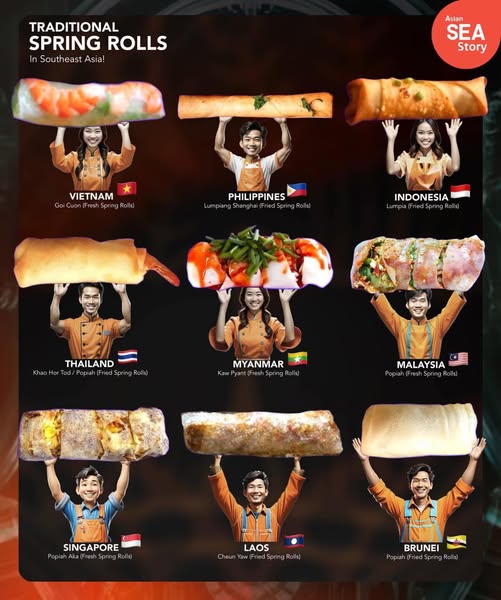
Southeast Asia is like the spring roll — different names, slightly different styles, but the same essence.
Vietnam calls it Goi Cuon.
Indonesia, Lumpia.
Malaysia, Popiah.
Thailand, Poh Pia.
Myanmar, Kaw Pyant.
Singapore, Popiah Goreng.
Centuries ago, before colonial lines were drawn, the Nusantara archipelago traded, travelled, and worked without modern borders.
Today, those borders are so embedded in our systems — much like that strip of pork — that removing them isn’t as simple as it sounds.
🚜 From Spring Rolls to Borderless Workers
Through FieldGig, Muthalib has seen a vision for a region where skills move freely.
Imagine:
- A Malaysian harvester working in Indonesia during peak season.
- A Thai drone operator training plantation workers in Brunei.
- A Vietnamese IoT specialist collaborating with a team in the Philippines.
This is the borderless skilled workforce model ASEAN could adopt — not to erase borders, but to work intelligently around them.
The benefits?
- Seasonal productivity boosts without complex migrant labour policies.
- Higher wages for workers as demand comes from across the region.
- Shared training and certification so skills become portable and more valuable.
The Bigger Picture
Muthalib’s spring roll moment in Hanoi wasn’t about food at all.
It was about connection.
It was about recognising that we already share more than what divides us.And if we can design systems — like FieldGig — that treat ASEAN’s workforce the same way we treat our shared food heritage,
we can feed not just our economies, but our unity.
#FieldGig #ASEAN2030 #BorderlessWork #AgriTech #FutureOfWork #RegionalGrowth #DigitalAgriculture #Nusantara